
Scotland’s new mega-lairds now controlling huge areas of Scotland
15 December 2025
Scotland has a long and tortured history of absentee landownership. However, in recent years we’ve seen a new form of absentee landownership growing rapidly and acquiring large estates, often financed by investors, billionaires and corporations. These new ‘mega-lairds’ are often involved in asset management and investments and are frequently based outside of Scotland.
These landowners may argue that they manage the land for nature, but there is little evidence of long-term commitment to the local people and environment, and limited transparency over how they operate.
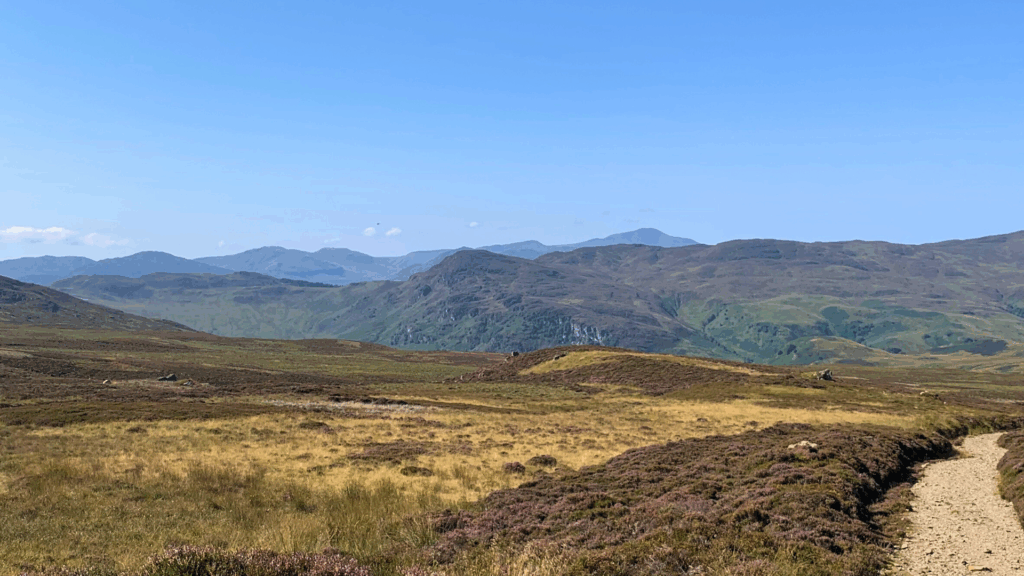
Mega-lairds are mainly focused on capital accumulation with landownership as part of an investable portfolio, rather than being focused on the long-term outcomes for people and nature. This is not what our land should be used for. Land is our most precious natural resource. It should not be a line on a spreadsheet for investors but the very bedrock of our economic, social, environmental and cultural wellbeing.
Given the power mega-lairds now wield in the Scottish land market and their rapid growth across the country, there are compelling reasons to ask hard questions about their intentions and methods.
Amongst the new type of landowners acquiring large amounts of Scotland are asset management group Gresham House and its partners/subsidiaries who own 66,879ha. US-based, Discovery Land Company, who have been buying land around eastern Loch Tay, including the Glen Lyon and Taymouth Castle estates and are in the process of converting it into a luxury golf and accommodation retreat.
Danish billionaires with a stated focus on the environment are prominent. Anders Povlsen, is the biggest private landowner in Scotland totalling around 88,406ha, largely in Sutherland, the Cairngorms, and Lochaber. Strathconon Estates in Ross-shire are another rapidly growing mega-laird, headed by Lego heiress Sofie Kirk Kristiansen, with land totalling 42,730 hectares.
Among the fastest growing of the new mega-lairds is Oxygen Conservation (OC), an Exeter-based company with a publicly stated aim to ‘help save the world’. They have taken control of 13 estates across the UK from Cornwall to the Highlands over the past four years.
OC have a stated aim to ‘deliver a range of natural capital products and services to allow nature to pay to protect and improve itself’.
They have quickly acquired five estates in Scotland which total over 48,000 acres. This includes the 12,000 -acre Invergeldie estate in Perthshire, over 15,000 acres of Dorback Estate in the Cairngorms, 11,366 acres near Newcastleton in the Borders, 523 acres of the Firth Tay and the recent purchase of the controversial 9,301 acre Kinrara Estate, west of Aviemore, from BrewDog.
Whatever the motivations and intentions of the new mega-lairds, it is clear that billionaires, corporations and asset managers are increasingly taking control of Scotland’s land.
It’s important that the new shape of land ownership and the business models are closely scrutinised as they shape the land market, local economic development and impact on many people living on or near the landholdings.
At the moment that scrutiny simply isn’t happening. The sale and purchase of huge areas of land is often opaque with the motivations and plans of the new lairds and the benefits for local communities unclear.
Our concerns about the mega laird’s motivations have been increased by Oxygen Conservation’s stated ambition that they want to expand their portfolio to 250,000 acres, worth £1 billion, by 2030 and then sell the entirety, before moving focus to the USA. This has raised questions about the long-term commitment to restoring nature, rather than treating land as another investible commodity.
Oxygen Conservation’s corporate structure and debts are a complex matrix of ownership and lending from various parent companies across their landholdings. Debts of £25m against Invergeldie Estate and £18m against the Newcastleton estate show the borrowing needed for this rapid acquisitions. Yet with much of the loan money seemingly coming from the various companies of the Oxygen House portfolio, it can be hard to trace who has ultimate control and how stable the financing may be.
There are rightly questions about the viability of this business model when much of the proposed income from the landholdings is said to be based on the future profitability of carbon credits – where companies and individuals offset their carbon emissions elsewhere by paying landowners to sequester carbon, largely through peatland restoration and tree-planting funded through public grants.
In 2022 The Herald covered Rich Stockdale, OC CEO, saying “don’t buy carbon credits” and that carbon credits were ‘posing a new threat to the natural environment, local communities and wildlife.” There has been a dramatic reversal from the corporation, in June 2025 OC sold £1 million worth of carbon credits.
The market in carbon credits has been volatile with little tangible increase in carbon prices and a very low number of transactions within the UK. There is great uncertainty around future pricing, and many investors see the market as too risky.
The development of wind farms on their estates in Perthshire and the Scottish Borders, led by Low Carbon, another company under the Oxygen House umbrella, could be how the corporation seeks to increase land values and boost their portfolio.
But members of the community in Comrie have said they feel aggrieved that OC were not transparent about their proposals for the wind farm at the time of purchase, despite making assurances that they were not considering any major wind energy development as part of their plans for the estate.
The lack of transparency around land transactions and business models, and the considerable power and resources that the new mega-lairds have at hand, makes proper scrutiny of Scotland’s landowners more difficult than ever.
We welcome landowners who provide business models and land management plans which are as transparent as possible and who deliver long-term benefits for people and nature, in line with the Scottish Government’s expectations and the Land Rights and Responsibilities Statement.13
But communities lose out when absentee businesses from far away take control of the land, they lose out when they have little say over how that land is used, and they lose out if all that land goes back on the market in a few years’ time. Ultimately communities and the wider country lose out when landownership is purely about making money, with benefits for people and nature seemingly tokenistic at best.