
Land justice and young people in Scotland
11 February 2026
A blog post by Robyn Dunbar-Smith, Policy Support Officer.
Across Scotland, young people are navigating land-related challenges that echo global struggles. While the stakes and contexts differ hugely from place to place, the underlying dynamics are often similar, with shared experiences of dispossession, injustice and extraction.
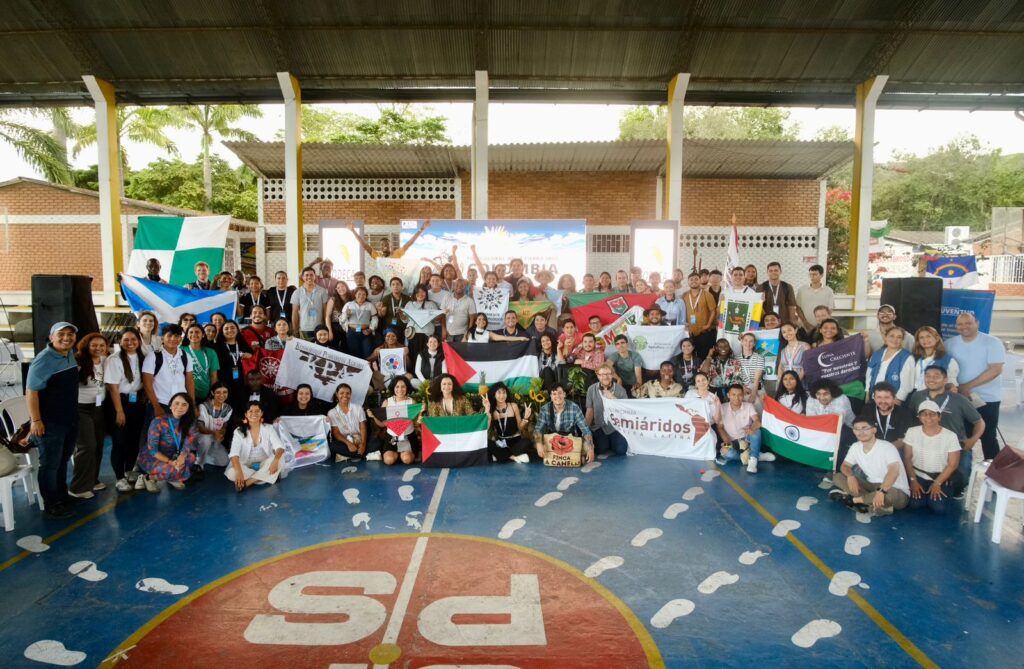
As members of the International Land Coalition (ILC), Community Land Scotland have had the opportunity to work with young people facing land struggles in hugely diverse contexts. In 2025 our director of policy & advocacy, Dr Josh Doble, visited Ocaña in the Catatumbo region of Colombia with local youth and indigenous communities as well as fellow members of the ILC, sharing experiences of land reform, indigenous land rights, youth activism and agroecology. It was evident that the scale and intensity of injustice varies around the world, but common themes emerge again and again: land concentrated in the hands of few, decisions made without youth input and land treated primarily as a financial asset rather than a shared resource.Since starting with Community Land Scotland, I took up a role as a youth representative for the Europe, Middle East and North Africa (EMENA) region within the International Land Coalition. I participate in meetings of the ILC Youth Steering Committee, aiming to align the regions youth priorities with global and cross regional strategies and to begin building a youth platform across the EMENA region.
Scotland’s context is different from other parts of the region, and in many ways privileged, but thinking about these global challenges, alongside the conversations I have had with my peers and other young people across Scotland, as well as the understanding I’ve built since starting with Community Land Scotland provides a useful point from which to consider how land injustice shows up in our communities and impacts on the everyday lives of young people in Scotland.
Housing insecurity
The most obvious way in which I can see land injustice affecting young people is through housing insecurity. In the decade since I first left home, I have lived in student accommodation, five different flats, as well as spent stints at my grandparents and a move back to my parental home. My position is extremely privileged, especially in comparison to many of my friends and peers. Yet, even then, constant relocation and the fact that my situation could quite easily change and I’d have no control over it, has meant that when it comes to the communities I have lived in, my position has felt transient and passive. It hasn’t always felt as though I have a stake or a right to influence or say what should happen. Despite contributing economically and socially, connection to place can feel fragile due to the precarious renting market.
Between 1999/2000 and 2022, the proportion of young people in Scotland living in the private rental sector rose from around 6% to 19% driven largely by increased barriers to homeownership and social housing. This is particularly prevalent in urban areas, where young people living in the most deprived urban areas are increasingly likely to live in the private rental sector. This increases their risk of instability and inability to properly plan for the future, worsens mental and physical health outcomes and has left many young people delaying or avoiding starting their own family too.(1)
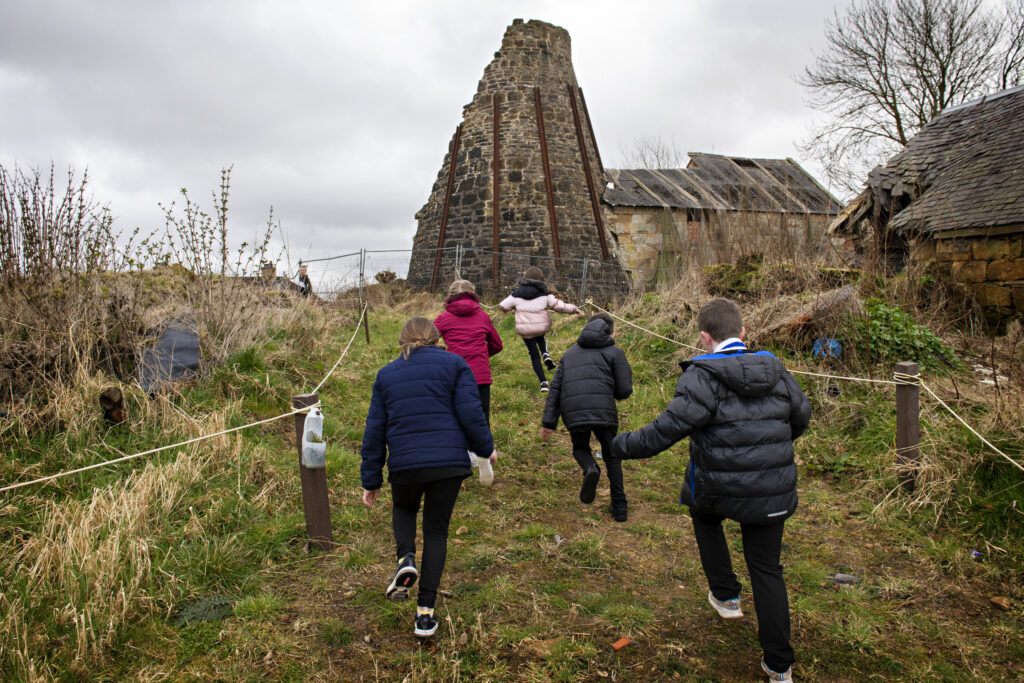
Within many rural communities, young people who have felt connected and rooted to their area and community end up being practically excluded. There likely may be family ties and a sense of belonging to the community, however, suitable housing is often unavailable – increasingly tied up as second homes or short-term lets, driving up the prices of remaining available housing, leaving it out of reach for most young people who may then be forced to leave the place they call home or to remain living with family if that is an option. Whilst these are choices that many young people wish to make, for many it is the only available option available. This in turn can impact wellbeing outcomes as well as leave a limited sense of agency over their own lives, contributing to feelings that their life is being delayed.
These issues are not just market failures, but a stark reminder of injustices within how land in Scotland is owned, valued and governed, and the deep consequences of unfair ownership systems on everyday lives. Patterns of landownership and control shape where homes are built, who they are built for, at what cost, and with what degree of permanence. When land is treated as an investment or mechanism to create financial returns, housing for local people becomes harder to secure. This is particularly visible in the growth of private renting, second homes and short-term lets, which can remove housing from stable long-term use whilst driving up prices. For young people, this translates into instability, displacement and limited agency over their own lives, turning land injustice into a lived, everyday experience that determines who can stay, put down roots and plan a future in the places they call or want to call home.
Work & opportunity
Housing insecurity is closely tied to issues of work and opportunity. In conversations with other young people, it is clear that a lack of housing acts as a direct barrier to work, education and training opportunities. In many cases, leaving a place is less a choice and more a necessity, driven by the simple fact that it’s difficult to secure both a home and a livelihood in the same place, a key issue driving youth outmigration in many parts of Scotland.
Our concentrated pattern of landownership in Scotland means that the power to create local opportunities largely rests in the hands of a limited number of individuals and organisations. Regardless of whether action/inaction worsens local economic, social or environmental conditions, the power to shape things largely remains in the hands of the few with limited scope for challenge or change. Within this context, there is a huge imbalance where young people are expected to absorb the impacts of and carry burdens created by land systems which they have limited, if any, control over. This pattern has impacts on everyone of course, but for young people who are most likely to be in formative years, this restriction of agency over life and career trajectory can leave many in a position where deciding to reach for opportunity is highly conditional on personal sacrifice. Young people are expected to adapt and be resilient in a difficult economic climate – to move away, commute long distances, retrain or accept insecure or seasonal work they might not otherwise choose to make things work, whilst the structures that are driving worsening local economic and social conditions remain largely unaffected. There is an urgent need to rebalance and ensure those closest to the power are asked to answer to the consequences of their decision-making, rather than expecting those furthest from it to absorb the burden.
Climate & intergenerational justice
For many young people in Scotland, the climate emergency is of huge concern and land justice cannot be separated from this on a global or national scale. These are not abstract debates, but questions about what kind of future is possible, and who gets to shape it. Decisions about how land is owned, managed and used shape who benefits from the land, who bears the environmental costs and who has a say in how places adapt to change. In Scotland where landownership remains highly concentrated, climate solutions and land use decisions are likely to benefit those who already hold power. These decisions impact everybody and yet for young people who often care deeply, the impact is compounded by the fact that they often have least amount of control or influence but will have to live with the consequences the longest, despite their limited role in shaping decisions. This raises clear questions of accountability and intergenerational justice.
Concluding thoughts
Connecting local experience to global conversations has reinforced that these challenges are not unique to Scotland. Across vastly different contexts, young people are being asked to absorb uncertainty and risk, while control over land and resources, and therefore the future, remains concentrated and protected. Community landownership offers a way of pushing back against this pattern, grounding global questions of land injustice in practical, place-based change. For young people this shift matters, not just materially, but in restoring a sense that staying, participating and shaping a place is both possible and worthwhile, allowing them to feel connected and powerful within their communities. Community ownership has the potential to create the conditions needed for young people to choose to stay, to return and to feel a sense of stake in the future of a place.
This is important in the present day where young people are facing multiple and overlapping pressures of housing insecurity, limited social mobility, growing anxiety about the future and are becoming increasingly disillusioned with the political offerings being made. While land justice/injustice can sometimes feel distant, decisions being made around housing, work and opportunities are deeply connected to it, and it shapes young people’s everyday lives in very tangible ways. In this sense land justice is not just a structural, abstract issue; it is something being felt personally, affecting the choices, risks and possibilities young people have across Scottish communities.
In conversations I’ve had with a number of incredible community landowners working to improve their local areas and the lives of people within their community, it has been heartening to hear that many are actively exploring innovative solutions to ensure young people’s voices are meaningfully heard, even in places hollowed out by depopulation where young voices are sadly absent. There is recognition of the challenges of doing so in a way that ensures participation is realistic, supported and ongoing. It makes me hopeful for a future where power, risk and reward are rebalanced, and young people are actively empowered to shape both their individual lives and the communities within which they live.
- www.linkedin.com/in/robyndunbarsmith